
Introduction
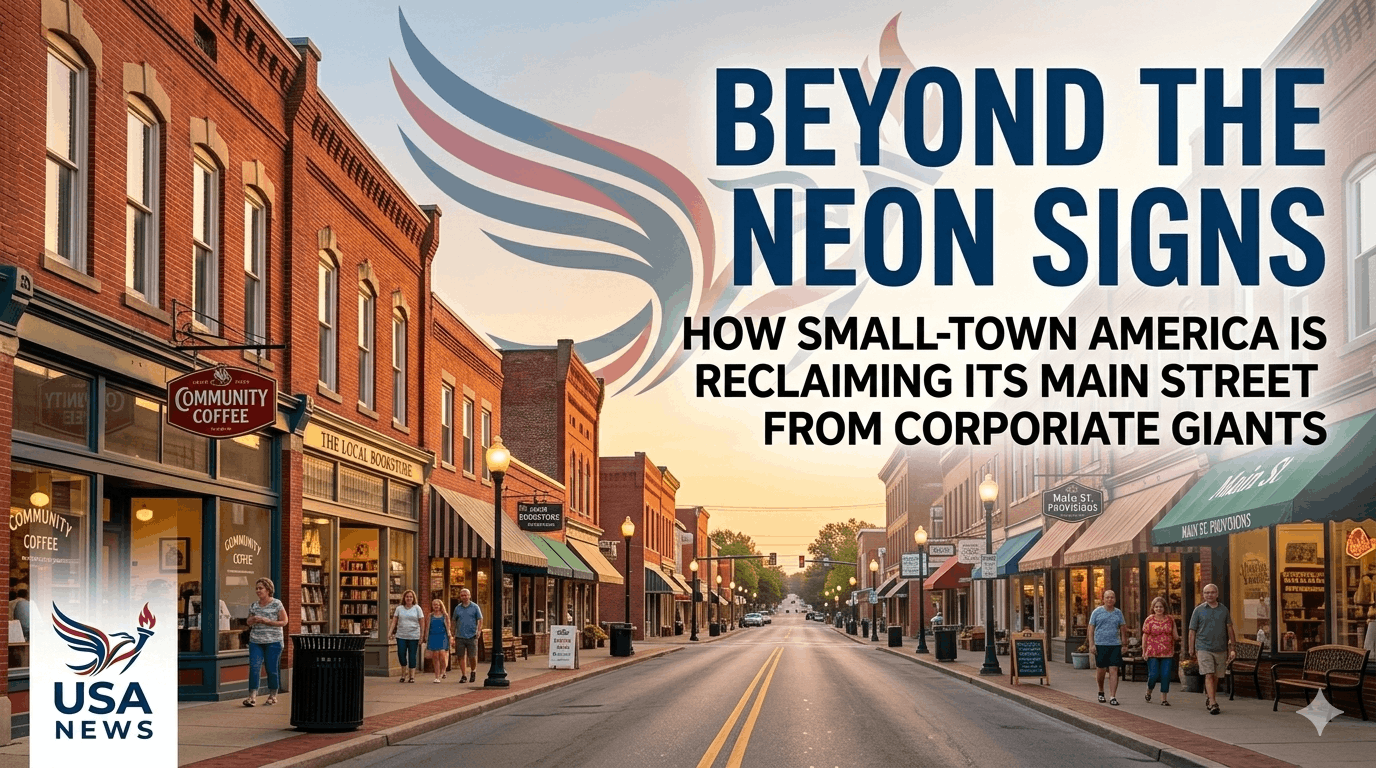
In the heart of the Midwest and scattered across the rolling hills of the South, a quiet revolution is brewing. For decades, the narrative of “Small Town USA” was one of decline—empty storefronts, boarded-up windows, and the inevitable shadow of big-box retailers looming on the outskirts of town. But in 2026, the pulse of the community is beating stronger than ever. From the brick-paved streets of Galena, Illinois, to the coastal charms of Beaufort, South Carolina, local residents are doing something radical: they are choosing the “Local Hero” over the “Corporate Giant.”
The Soul of the Neighborhood
What makes a community? It isn’t just a collection of zip codes or a tax base. It is the coffee shop where the barista knows your name, the hardware store that carries that one specific screw you need for a 1950s radiator, and the local bookstore that hosts Saturday morning readings for kids. These “Grassroots Initiatives” are the heartbeat of the American town.
Big networks often overlook these stories because they don’t involve billion-dollar scandals or national election swings. Yet, for the person living on Maple Street, the opening of a new community-owned grocery store is more impactful than any headline coming out of D.C.
The Challenges of the “Big Box” Shadow
To understand the revival, we must acknowledge the struggle. The “Walmart-ization” of America in the early 2000s left many local economies in tatters. When a massive retailer moves in, local prices often drop temporarily, but the long-term cost is the erosion of local wealth. Studies show that for every $100 spent at a local business, roughly $68 stays in the community. At a national chain? That number drops to less than $15.
Grassroots Success Stories (2025-2026 Trends)
- Community-Funded Renovations: In towns like Thomasville, Georgia, residents have pooled resources through “crowd-equity” to buy and restore historic buildings, preventing them from being demolished for parking lots.
- The “Slow Shopping” Movement: People are tired of the sterile, automated experience of self-checkouts. There is a surging demand for curated, human-centric shopping experiences.
- Farmers Markets as Social Hubs: No longer just for vegetables, these markets have become the “Town Square” of the digital age.
Why it Matters for the Future
As we look toward the mid-2020s, the “Community Pulse” is about resilience. It’s about the fact that when a local business thrives, the high school football team gets a sponsor, the local park gets a new bench, and the town retains its unique identity.
Conclusion
Main Street isn’t just a road; it’s a reflection of the American spirit. The heartbeat of our towns is found in the hands of the craftsmen, the small-scale farmers, and the local entrepreneurs who refuse to let their heritage be replaced by a barcode. As we continue to dive deep into these neighborhood stories, one thing is clear: Small-Town America isn’t just surviving—it’s leading the way back to a more connected, human world.